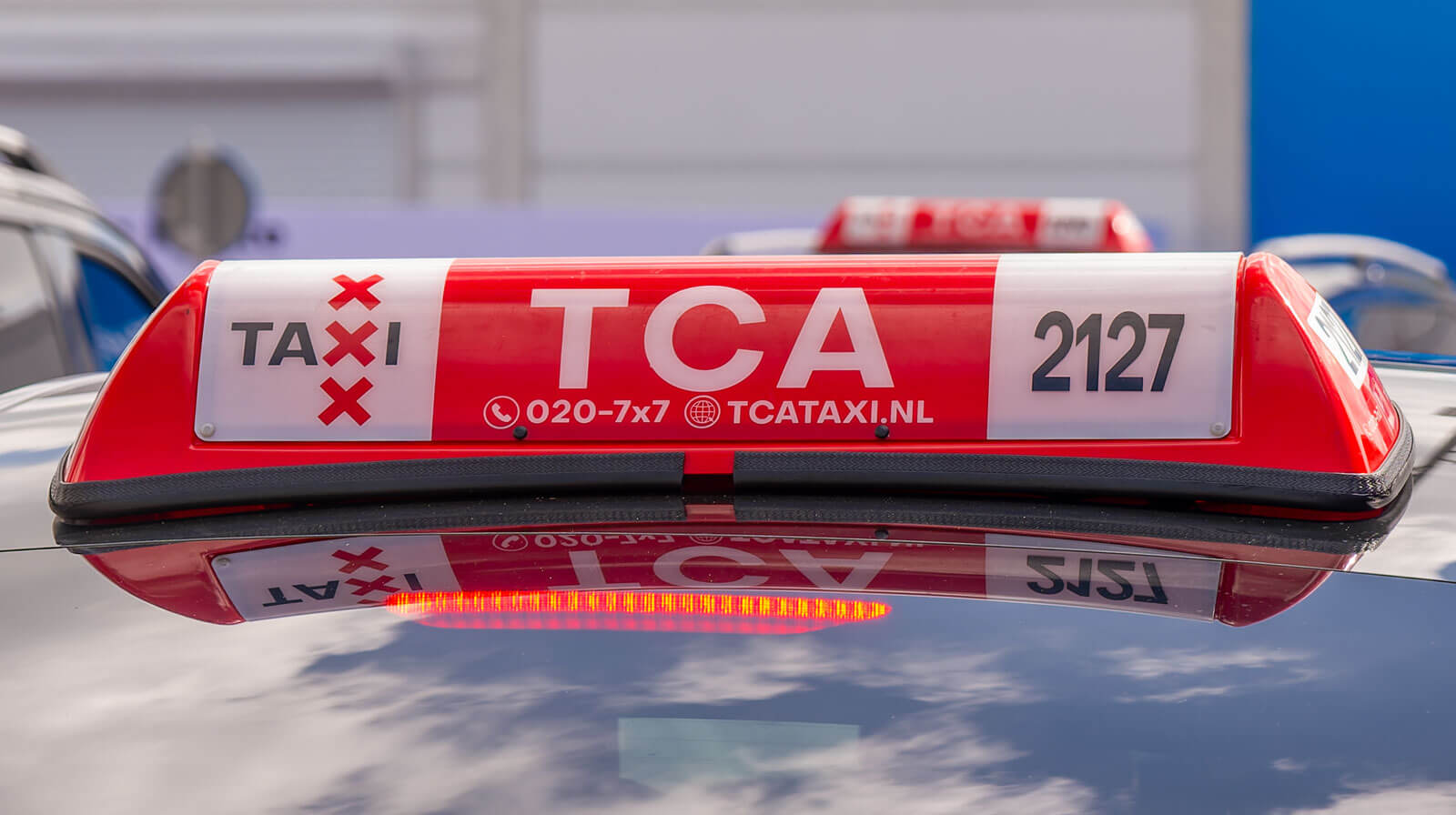
In this interview series, a taxi dispatch center is featured each time. This allows us to take a look at this part of the taxi industry. What is going well? What is not going well? What is needed for the future? This time, Taxi Centrale Amsterdam (TCA) takes center stage.
Solaiman Ben Mohammed recently became the interim director of the taxi dispatch center. He has taken over from Hedy Borreman.
Do you still have enough rides?
According to the interim director, the demand for taxi transport is still there, certainly in a city like Amsterdam. At the same time, he sees that the volume could be better. “There are peak moments, but also clear troughs where the supply of rides lags behind.” In addition, he notices that the distribution of rides is changing. “Platforms are capturing an increasingly larger share of the market, meaning traditional dispatch centers have relatively fewer rides.” Therefore, TCA wants to focus more strongly on demand, visibility, and customer loyalty. “We are therefore also working on refining our strategy to better align with current market developments,” says Ben Mohammed. Are you experiencing a driver shortage?
“Yes. It is not just about recruitment, but also about retention. Drivers are dealing with rising costs and uncertainty regarding income, making the profession less attractive.” According to him, this has direct consequences for the dispatch center’s capacity.
What is going well?
According to him, the taxi dispatch center is becoming increasingly professional and focusing more on quality, data, and efficiency. “We have a strong position in Amsterdam and a loyal group of drivers. In addition, we are actively working on recalibrating our strategy so that we can better respond to the changing market. This movement ensures that we become more agile.”
What is going less well?
Maintaining a healthy revenue model currently appears to be one of the biggest challenges. “Costs are increasing on multiple fronts, while the scope to raise rates accordingly remains limited. Furthermore, we see that the market is becoming increasingly fragmented.” He observes that different providers are using different pricing strategies. As a result, it becomes less transparent for customers and more difficult for traditional taxi dispatch centers to position themselves effectively. According to Ben Mohammed, this puts extra pressure on the sector and makes it more challenging to operate sustainably and stably in the long term.
How do drivers experience the pressure on rates due to rising costs?
“That pressure is significant. Drivers immediately notice that their margins are under pressure due to higher fuel prices, insurance, and maintenance costs. In many cases, there is less left at the bottom line, while the work remains intensive,” he continues. According to him, this is causing unrest within the sector.
What should politicians do about the high fuel prices?
According to him, the government should look into targeted measures to relieve the burden on the sector. “Think of temporary reductions in excise duties or specific schemes for professional transport. Taxis play an important role in urban mobility, and they deserve more recognition and support in return.”
How do you deal with competition from platforms like Uber and Bolt?
The competition is fierce. “That forces us to continuously improve.” Nevertheless, he points out that TCA has been a well-known name in Amsterdam for more than 40 years. “We know the city, the customer, and the dynamics like no other. We distinguish ourselves through reliability, local roots, and quality. While platforms often focus on price and scale, we focus on continuity, professionalism, and trust.” To remain competitive, TCA invests in technology and flexibility. “Traditional taxi dispatch centers like TCA fall under the TTO scheme in Amsterdam and are therefore under municipal control, whereas platforms primarily operate under national legislation and regulations from The Hague. This difference in management and obligations means that, in practice, competition is not always directly comparable. Additionally, we see that in other European countries, the price ratios between platforms and regular taxis are closer. In the Netherlands, that difference is significantly larger, which further increases competitive pressure for traditional parties.”
What changes are needed for the future?
“As TCA, we must continue to innovate. That means investing in technology, transparent pricing models, and a better balance between supply and demand. For us as Taxi Centrale Amsterdam, there is also a clear responsibility regarding our pricing policy. We must critically examine how we position our rates for the future: on the one hand, remaining competitive for the customer, and on the other, ensuring that it remains profitable for drivers. That balance is currently one of the biggest challenges for the TCA,” he concludes.